
Enhancing Microgrid Resilience with Custom Home Solar Batteries in China
Nov 3, 2026
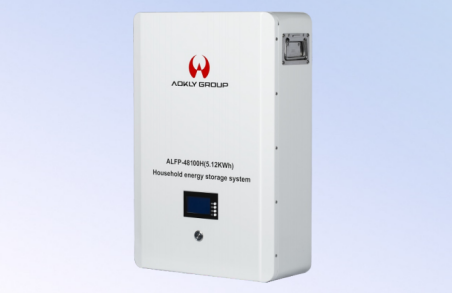
Qingyuan, Guangdong Nov 3, 2026 (Issuewire.com) - Have you ever wondered what keeps a fridge running, the lights on, and the router connected when the grid goes dark? This question sits at the heart of home microgrid resilience -- the ability of a rooftop solar system paired with storage to sustain basic loads such as refrigeration, lighting, and communication devices when the utility fails or weakens.
As a custom home solar battery producer in China, Aokly Group (Guangdong Aokly Group Co., Ltd) has shaped its lithium and sodium-ion product lines around this exact need, offering modular storage components sized to real household load curves rather than one-size-fits-all packs.
Home microgrid resilience is no longer a niche concern. Rising rooftop PV installations across Chinese provinces and export markets in Africa, Southeast Asia, and Europe have pushed residential storage from a luxury add-on toward a working utility layer. Within this context, AOKLY GROUP positions itself as a component supplier that helps installers and system integrators build reliable backup, not as a turnkey solution vendor.
1. A Product Range Built Around Household Loads
Guangdong Aokly Group Co., Ltd offers a broad set of residential storage building blocks. On the lithium side, the catalogue includes 12.8V modules at 7Ah, 12Ah, and 18Ah for light backup duties, along with 48V racks running from 100Ah up to 200Ah for whole-home coverage. An all-in-one unit rated at 3.5kW output and 5.1kWh usable energy is available for households that prefer a single wall-mounted cabinet rather than a split inverter-and-battery layout.
Sodium-ion cells sit alongside the lithium range as a cost-sensitive and cold-climate option. These are aimed at households in northern regions where winter temperatures push standard lithium chemistries closer to their lower operating limits. Capacity sizing follows the customer's PV array rating and daily consumption profile, which is the practical meaning of a custom home solar battery in this context.
The group's core factory activities -- cell integration, BMS assembly, and cabinet fabrication -- draw on production and testing equipment imported from Italy. This equipment base supports the mixed lead-acid, gel, motive-power, starting, and lithium lines that the company has built over years of operation as a high-tech enterprise in Guangdong Province.
2. Key Technical Points Behind Resilience
Several design choices decide whether a home battery holds up during an outage. Energy density is the first. Lithium iron phosphate cells pack more usable kWh into a given wall footprint than older chemistries, which matters in apartments and small utility rooms. AOKLY's 48V lithium racks are designed for vertical stacking, letting installers add capacity in later phases without replacing the initial unit.
The battery management system is the second. AOKLY's BMS handles overcharge protection, over-discharge cutoff, cell balancing, and temperature monitoring. These functions extend cycle life and prevent the kind of thermal events that damage trust in residential storage. Real-time state-of-charge data is passed to the inverter through RS485 or CAN communication, depending on the model.
Protocol compatibility is the third, and it is often overlooked. A home battery only supports smooth off-grid switching if it speaks the same language as the hybrid inverter. AOKLY publishes compatibility notes for common inverter brands, which reduces commissioning delays on site.
Sodium-ion adds a fourth angle: cold-weather performance. Sodium chemistry retains a larger share of rated capacity at sub-zero temperatures than typical lithium formulations. For weak-grid rural households in Heilongjiang, Inner Mongolia, or comparable climates abroad, this trait can be the difference between a working morning routine and a frozen pipe.
3. Neutral Guidance on Custom Sizing
Choosing the right home solar battery producer partner starts with math, not marketing. A short checklist helps:
Calculate daily consumption in kWh by adding up the loads that must survive an outage -- usually the fridge, a few LED circuits, a router, and a phone charger. Multiply by the number of backup hours required, then divide by the battery's rated voltage to reach a target Ah figure. Adding a 20% headroom margin covers depth-of-discharge limits and gradual capacity fade.
Next, confirm that the chosen module's communication protocol matches the existing or planned inverter. A mismatch here forces either an inverter swap or a manual-transfer setup, both of which reduce resilience.
Finally, let a licensed local installer verify the design against IEC 62619, UL 1973, or the equivalent regional standard. Oversizing the pack beyond what the PV array can realistically refill each day wastes budget and adds weight without adding real backup value. A grounded, right-sized system tends to outperform an oversized one in day-to-day use.
This measured approach is why many integrators view AOKLY GROUP as a component-level partner rather than a packaged-solution vendor. The company supplies traceable cells, tested modules, and documented BMS behaviour, leaving system architecture in the hands of the professionals closest to the site.
4. Industry Context: Where Residential Storage Sits Today
Recent industry reporting from Guangdong Aokly Group Co., Ltd tracks steady growth in residential lithium demand across Southeast Asia and parts of sub-Saharan Africa, where weak grids and diesel-fuel costs make solar-plus-storage economically viable.
The company also notes rising installer interest in 48V rack-style products over older 12V wall packs, mainly because higher-voltage architectures reduce cable losses and simplify inverter pairing.
Sodium-ion adoption is at an earlier stage. Field data from pilot installations suggests it will complement rather than replace lithium in the near term, filling the low-temperature and low-cost corners of the residential market.
5. Closing Note
Home microgrid resilience comes down to matching the right storage components to actual household needs. AOKLY GROUP contributes to this outcome through traceable manufacturing, modular lithium and sodium residential storage elements, and clear technical documentation.
As a home solar battery producer working with installers, distributors, and EPC teams, Guangdong Aokly Group Co., Ltd focuses on being a compliant, verifiable supplier -- not a one-stop project contractor. Enquiries and technical datasheets are available through the company's official channels at https://www.aokly-battery.com/.
FAQ
- What is the typical lifespan of an AOKLY lithium home battery?
- Can AOKLY batteries work with any hybrid inverter brand?
- Why choose sodium-ion instead of lithium for a home in a cold region?
- How is a custom battery capacity determined?
- Does AOKLY handle full residential installations?
Visit https://www.aokly-battery.com/ for product datasheets, compatibility lists, and enquiry contacts.
Media Contact
Guangdong Aokly Group Co.,Ltd
+86 020 8686 1998
No.50, Huanyuan North Road, Donghua Town, Yingde CCity, Guangdong Province, China
Source :Guangdong Aokly Group Co.,Ltd
This article was originally published by IssueWire. Read the original article here.
YOUR NEWS, OUR NETWORK.
Do you have Great News you want to tell the world?
Be it updates about your business or your community, you can make sure that it’s heard by submitting your story to our network reaching hundreds of news sites across 6 verticals.


